
When homeowners think about water damage, they usually picture a flooded basement, stained walls, or standing water after a heavy storm. But some of the most serious moisture problems start in a place many people rarely check: the crawlspace. Poor waterproofing on crawlspace can affect your floors, foundation, indoor air, and the long-term safety of your home.
If you have noticed sagging floors, musty smells, higher humidity, or soft spots underfoot, your home may be showing early signs of crawlspace water damage. These issues may seem minor at first, but they often point to moisture collecting below your living space. Over time, that moisture can lead to wood rot, mold growth, structural weakening, and costly crawlspace repairs.
Waterproofing crawlspace areas is one of the most effective ways to protect your home from hidden moisture problems. The goal is not just to dry out the space. It is to control water, reduce humidity, protect the foundation, and help keep the air inside your home healthier.
Why Waterproofing Crawlspace Areas Is Important for Your Home
Waterproofing crawlspace areas helps protect the part of your home that supports everything above it. Your crawlspace may be out of sight, but it plays a major role in your home’s structure, comfort, and air quality.
When water enters a crawlspace, it can come from several sources. Rainwater may collect around the foundation. Groundwater may rise beneath the home. Poor drainage, plumbing leaks, open vents, and high humidity can also create damp conditions. Once moisture gets trapped in a crawlspace, it does not always dry out on its own.
That trapped moisture can damage wooden beams, floor joists, insulation, and foundation materials. It can also create the perfect environment for mold, mildew, insects, and musty odors. Because air from the crawlspace can move upward into the living areas of the home, crawlspace moisture may also affect how your home smells and feels.
A properly waterproofed crawlspace helps manage water before it becomes a bigger issue. Depending on the condition of the home, this may include drainage solutions, vapor barriers, sump pumps, sealing, insulation improvements, and humidity control. The right approach depends on where the water is coming from and how much damage has already occurred.
Sagging Floors May Be a Sign of Crawlspace Water Damage
Sagging floors are one of the most noticeable signs that something may be wrong below your home. If your floors feel uneven, bouncy, soft, or lower in certain areas, the issue may be connected to moisture damage in the crawlspace.
Wooden beams and floor joists are designed to support the weight of your home. When they stay damp for long periods, they can weaken. Moisture can cause wood to swell, soften, rot, or lose its strength. As the support system below the floor begins to break down, the floors above may start to sag.
Some homeowners first notice the problem when furniture no longer sits level, doors begin to stick, or gaps appear between floors and baseboards. These warning signs should not be ignored. While a small dip in the floor may not seem urgent, it can point to a deeper structural issue that needs professional evaluation.
Crawlspace foundation repair may be needed if water has affected the supports, piers, beams, or foundation walls below the home. The sooner the issue is inspected, the easier it may be to prevent further movement or damage.
Musty Smells Often Start in a Damp Crawlspace
A musty smell inside the home is another common warning sign of crawlspace water damage. Many homeowners try to cover up the odor with candles, sprays, air fresheners, or dehumidifiers inside the living space. But if the smell keeps coming back, the source may be below the floor.
A crawlspace with excess moisture can develop mold, mildew, damp insulation, and decaying wood. These materials often create that heavy, earthy, musty odor. Because air naturally moves from lower areas of the home upward, smells from the crawlspace can travel into bedrooms, hallways, closets, and living rooms.
This is one reason crawlspace repair should not focus only on what you can see from inside the home. The real issue may be hidden underneath. If the crawlspace is damp, dirty, or poorly sealed, the air inside your home may continue to feel uncomfortable until the moisture problem is corrected.
Waterproofing crawlspace areas can help stop the odor at the source. By reducing moisture, sealing exposed ground, and improving drainage or humidity control, your home can feel cleaner, drier, and more comfortable.
How Moisture Leads to Crawlspace Repair Problems
Moisture damage in a crawlspace usually gets worse slowly. That is what makes it easy to miss. A small amount of water after a storm may not seem like a major concern. A little humidity may feel normal. But repeated exposure to moisture can create serious crawlspace repair problems over time.
One common issue is wood rot. When beams, joists, or subfloor materials stay wet, they may begin to decay. This can weaken the support system beneath your floors. Another common issue is mold growth. Mold can spread on wood, insulation, and other surfaces when moisture levels remain high.
Insulation can also be damaged by crawlspace water. Wet insulation loses effectiveness and may begin to sag or fall. This can make your home less energy efficient and less comfortable. In some cases, moisture can also attract pests that prefer dark, damp environments.
Foundation materials may also be affected. Water pressure, poor drainage, and shifting soil can contribute to cracks, settlement, or movement. When this happens, crawlspace foundation repair may be necessary to restore stability and prevent further damage.
The most important thing to understand is that moisture does not have to create visible flooding to cause problems. A damp crawlspace can quietly damage your home for months or years before the signs become obvious upstairs.
When Crawlspace Foundation Repair May Be Needed
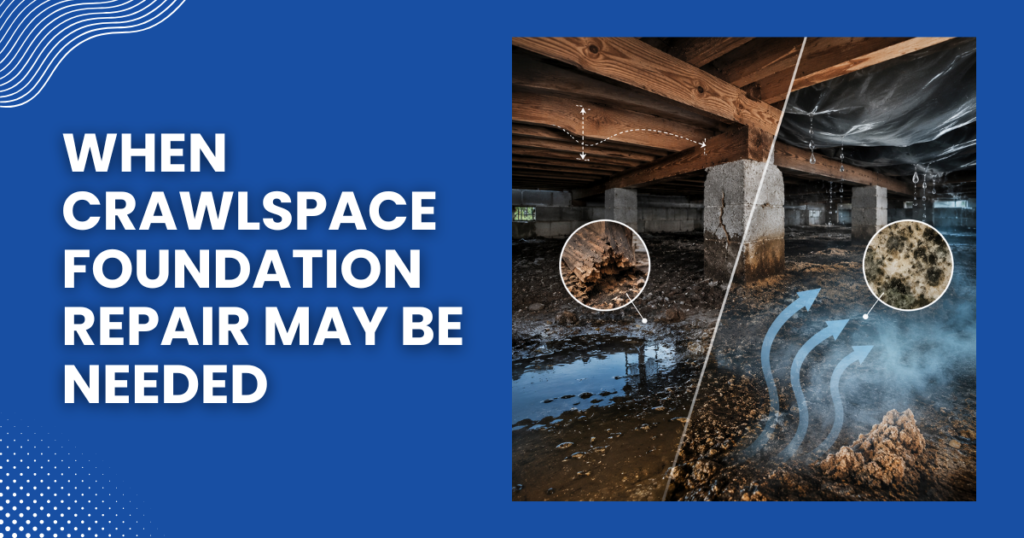
Crawlspace foundation repair may be needed when moisture has affected the structural parts of the home. This can include foundation walls, support columns, beams, floor joists, or the soil beneath the crawlspace.
Signs that your home may need crawlspace foundation repair include sloping floors, cracks in interior walls, doors that do not close correctly, gaps around trim, or visible cracks in the crawlspace foundation. You may also notice damp wood, rusted metal supports, standing water, or crumbling materials below the home.
These issues should be inspected by a professional because the cause is not always simple. Sometimes the problem is water intrusion. Other times it may involve poor soil support, aging materials, improper drainage, or past repairs that did not solve the source of the issue.
A good inspection should look at both the visible damage and the conditions causing it. Repairing a beam without addressing water intrusion may only provide a temporary fix. The best long-term solution usually combines structural repair with moisture control.
That is why waterproofing crawlspace areas and foundation repair often go hand in hand. The structure needs to be supported, but the moisture source also needs to be managed.
Common Crawlspace Repairs That Help Stop Water Damage
Crawlspace repairs can vary depending on the condition of the space. Some homes need minor moisture control. Others need a more complete repair plan that addresses water, humidity, foundation movement, and damaged materials.
A common solution is installing a vapor barrier over exposed ground. This helps reduce moisture rising from the soil into the crawlspace. In more severe cases, full crawlspace encapsulation may be recommended to seal the area more thoroughly.
Drainage improvements may also be needed if water is entering the crawlspace after rain. This can include interior drainage systems, exterior grading improvements, or sump pump installation. If the crawlspace has standing water, the water should be directed away from the home before it causes more damage.
Damaged wood may need to be repaired or replaced. If beams or joists have weakened, structural reinforcement may be necessary. In homes with foundation movement, crawlspace foundation repair may include stabilizing supports or correcting areas that have shifted.
Humidity control is also important. Even after visible water is removed, high humidity can continue to cause mold, odors, and wood damage. A properly designed crawlspace repair plan should address both liquid water and moisture in the air.
How Waterproofing Crawlspace Solutions Protect Indoor Air Quality
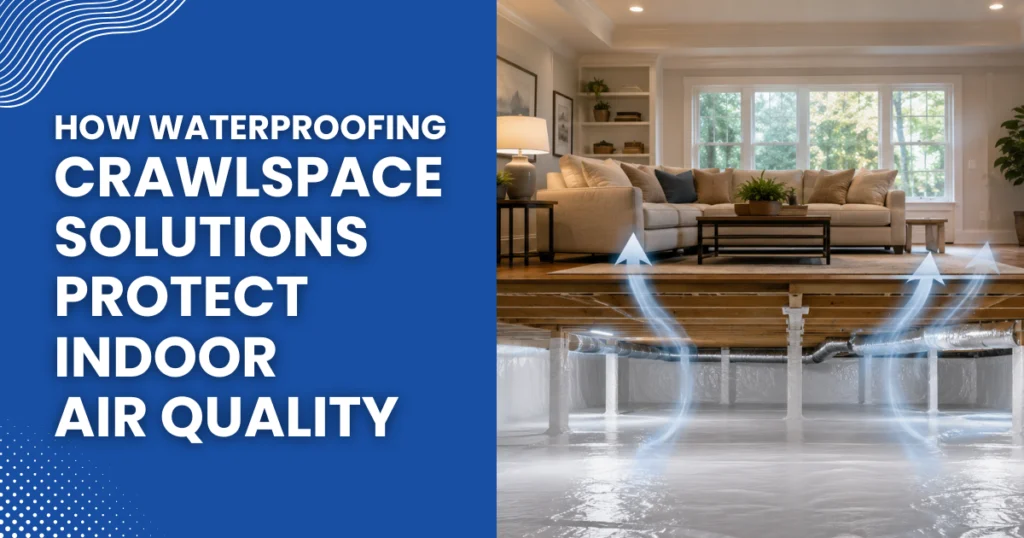
Many homeowners do not realize how closely the crawlspace is connected to indoor air quality. Air from the crawlspace can move into the home through small gaps, cracks, plumbing openings, and other pathways. If the crawlspace is damp, musty, or mold-prone, the air above it may be affected.
This can make the home feel humid or uncomfortable. It can also contribute to persistent odors that are difficult to remove. In some cases, homeowners may notice that certain rooms smell worse than others, especially rooms located above the crawlspace.
Waterproofing crawlspace areas helps improve the conditions below the home. By reducing moisture, sealing exposed ground, and controlling humidity, the crawlspace becomes less likely to produce musty smells or support mold growth.
This does not mean every indoor air issue starts in the crawlspace. But when a home has musty odors, damp floors, or humidity problems, the crawlspace should be part of the inspection. Fixing the source below the home can often make the entire house feel fresher and more comfortable.
Why You Should Not Wait to Schedule Crawlspace Repairs
Crawlspace water damage rarely fixes itself. In many cases, it gets worse with each season. Heavy rain, snowmelt, humidity, and poor drainage can continue feeding moisture into the space. The longer the issue continues, the more expensive the repair may become.
Waiting can also allow damage to spread. What starts as a damp odor can turn into mold growth. What starts as slightly weakened wood can turn into sagging floors. What starts as minor foundation movement can become a larger structural concern.
A professional inspection can help you understand what is happening and what needs to be repaired first. You do not have to guess whether the problem is serious. An experienced crawlspace repair team can check for water entry, wood damage, foundation concerns, drainage issues, and humidity problems.
For homeowners in New Jersey, fast action is especially important because wet seasons can put added pressure on basements and crawlspaces. If your floors are sagging, your home smells musty, or your crawlspace feels damp, it is better to schedule an inspection before the next major storm.
Choose a Local Expert for Waterproofing Crawlspace and Crawlspace Repair
The right waterproofing crawlspace solution should be based on your home, not a one-size-fits-all repair. Every crawlspace is different. Some homes need better drainage. Others may need encapsulation, structural support, sump pump installation, foundation repairs, or a combination of services.
A proper inspection can help identify where the moisture is coming from and how much damage has already occurred. From there, the goal is to create a repair plan that stops water at the source, protects the structure, and helps prevent the same problem from coming back.
If you are dealing with sagging floors, musty smells, crawlspace moisture, or signs of foundation damage, it is worth addressing the issue before it becomes more expensive. Crawlspace problems often start quietly, but they can affect the comfort, safety, and long-term condition of the home.
Your crawlspace may be hidden, but the warning signs are not. If your home feels damp, smells musty, or has uneven floors, now is the time to find the source and protect your foundation.
