Most homeowners don’t think about basement waterproofing until something goes wrong. A small damp spot, a faint musty smell, or a hairline crack in the wall might not seem urgent at first. But these early warning signs are often your home’s way of telling you something bigger is happening beneath the surface.
Understanding the signs your home needs waterproofing can help you act before minor issues turn into costly damage. Water problems rarely stay small. What starts as moisture can lead to mold, structural concerns, and long-term foundation issues if left untreated.
If you’ve been wondering whether your basement is trying to tell you something, this guide will walk you through the most common warning signs of basement water problems and how to know if you need waterproofing services.
What Are the First Signs of Basement Water Damage?
One of the most common questions homeowners ask is: What are the first signs of basement water damage? The answer is usually subtle at first.
In many homes, the earliest signs are not standing water or flooding. Instead, they show up in smaller ways. You might notice a damp or musty smell that never fully goes away. The air may feel heavier, especially after rain. You might see faint discoloration on the walls or floors, or notice that certain areas feel slightly damp to the touch.
These early symptoms are easy to ignore because they do not always interfere with daily life. But they are often the first indication that moisture is entering your basement. Over time, that moisture can build up, spread, and begin to affect materials like drywall, wood framing, and flooring.
Catching these early signs gives you the best chance to address the issue before it becomes more serious.
Signs You Need Basement Waterproofing Before It Gets Worse
As moisture problems develop, the signs become more noticeable. Recognizing the signs you need basement waterproofing early can save you from larger repairs down the line.
A persistent musty smell is one of the clearest indicators. Even if you cannot see water, that odor often means moisture is present somewhere in the space. It may be trapped behind walls, under flooring, or within the concrete itself.
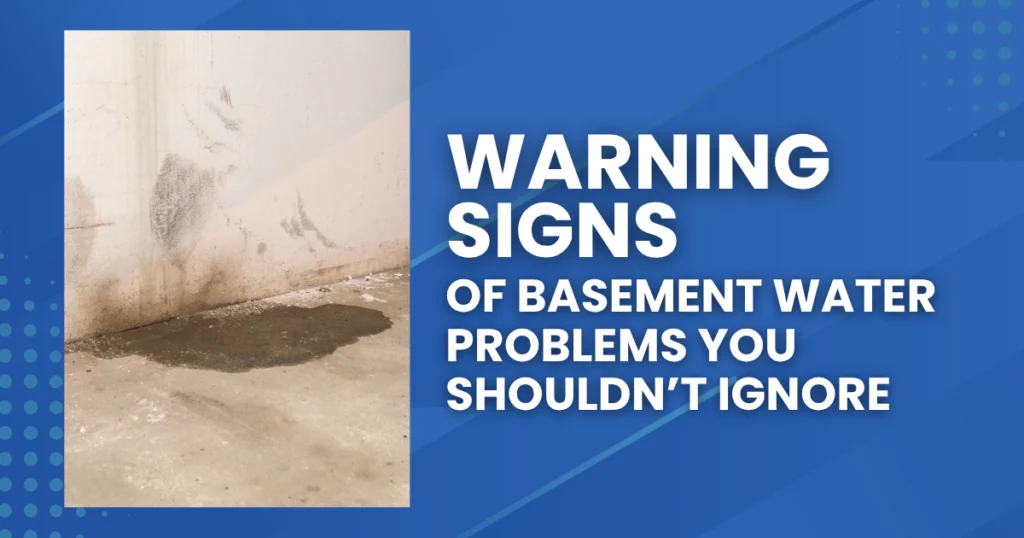
Water stains are another common sign. These can appear as dark patches on walls or floors, often after heavy rain. In some cases, you may notice a white, chalky substance forming on the walls. This is known as efflorescence, and it happens when water moves through concrete and leaves mineral deposits behind.
Cracks in the walls or floor can also signal trouble. Not every crack leads to a leak, but cracks can create a pathway for water to enter the basement. Over time, even small openings can allow moisture to seep in, especially during periods of heavy rainfall or high groundwater pressure.
Some homeowners also notice peeling paint or bubbling on basement walls. This happens when moisture pushes against the surface from behind, weakening the bond of the paint or coating.
These are all signs you need basement waterproofing, even if you have not yet experienced visible flooding.
Warning Signs of Basement Water Problems You Shouldn’t Ignore
As water issues progress, they tend to become harder to overlook. At this stage, the warning signs of basement water problems often begin to affect how you use the space.
You may start to see actual water entering the basement during storms. This could appear along the base of the walls, through cracks, or even through the floor. Puddles may form in certain areas, especially after heavy rain.
Humidity levels in the basement may feel consistently high. This can make the space uncomfortable and create the perfect environment for mold growth. Over time, excess moisture can also affect stored items, causing damage to furniture, boxes, and personal belongings.
In more serious cases, you might notice changes in the structure itself. Walls may begin to bow slightly, or cracks may widen. Doors or windows in the basement may become harder to open or close. These can be signs that water pressure is affecting the foundation.
At this point, the problem is no longer just about moisture. It becomes a structural concern that should be addressed as soon as possible.
How to Know If You Need Waterproofing Services
Many homeowners hesitate because they are unsure whether their situation is serious enough to call a professional. Knowing how to know if you need waterproofing services comes down to recognizing patterns and persistence.
If you notice that moisture-related issues return again and again, that is a strong indicator that the problem is not going away on its own. A one-time damp spot may not seem urgent, but repeated moisture after rain is a sign of an ongoing issue.
Another key factor is whether the problem is getting worse. A small crack that grows over time, or a smell that becomes stronger, suggests that conditions are changing inside your basement. Water problems tend to escalate, not stabilize.
It is also important to consider how the issue is affecting your home overall. If your basement feels damp, smells unpleasant, or cannot be used comfortably, it may already be impacting your indoor air quality and living environment.
In many cases, homeowners benefit from having a professional inspection even if they are still in the early stages. A trained eye can identify the source of the problem and explain what is happening before it becomes more severe.
Why Acting Fast Matters More Than You Think
When it comes to waterproofing, timing makes a significant difference. The sooner a problem is addressed, the easier and more manageable the solution usually is.
Water has a way of finding the path of least resistance. Once it enters your basement, it can spread through porous materials, weaken structural components, and create conditions that support mold growth. What begins as a minor issue can gradually affect larger areas of the home.
Delaying action can also increase repair costs. Addressing early signs of moisture is often simpler than repairing long-term damage. Waterproofing solutions are most effective when they are applied before the problem has fully developed.
For homeowners in areas with frequent rain or high groundwater levels, being proactive is especially important. Seasonal changes can make existing issues worse, leading to sudden flooding or more noticeable damage.